
Have you ever noticed a flower in your garden blooming in a completely different color, or a vegetable growing in an unusual shape? These changes are often the result of mutations—tiny alterations in a plant’s genetic makeup. While mutations may sound like something that only scientists study in labs, they also happen naturally in home gardens.
In this guide, we’ll explain how to calculate mutations in grow a garden, why it matters, and how you can use tools like a mutation calculator for plants to track genetic variation. Whether you’re a curious gardener or experimenting with mutation breeding, this article will make things clear and simple.
🌼 What Are Mutations in Gardening?
In simple terms, a mutation is a change in a plant’s DNA that can affect how it looks, grows, or reproduces. These changes may happen naturally or be encouraged by gardeners.
- Natural mutation in plants: Occurs randomly due to environmental factors like sunlight, soil conditions, or even cosmic radiation.
- Induced mutation: Happens when gardeners or scientists use chemicals, radiation, or breeding techniques to create new variations.
Examples of mutations you may see in your garden:
- A rose that blooms in two colors instead of one.
- Tomatoes that grow larger or smaller than usual.
- Leaves with different shapes or textures.
🌱 Why Calculate Mutations in a Garden?
You might wonder—why bother calculating plant mutations? The truth is, understanding mutations gives gardeners valuable insights into plant health and diversity. How to Calculate Grow a Garden Multiplier Easily
Benefits of calculating mutations:
- 🧬 Track genetic variation in gardening to see how your plants evolve.
- 🌼 Select beneficial traits such as bigger flowers or tastier vegetables.
- 🌿 Identify harmful mutations that might reduce yield or weaken plants.
- 🍅 Support mutation breeding in home gardens to create unique varieties.
- By keeping an eye on mutations, you’re not just gardening—you’re becoming a plant scientist in your own backyard
🧮 Step-by-Step: How to Calculate Mutations in Grow a Garden
Here’s a simple process you can follow:
Step 1 – Select a Plant Sample
- Choose one type of plant you want to study—like tomatoes, beans, or flowers.
Step 2 – Record Normal Traits
- Write down the usual size, color, leaf shape, or growth rate for that plant. This acts as your baseline.
Step 3 – Identify Variations (Mutations)
- Compare your plants to the baseline. Any noticeable differences—like a different flower color or leaf pattern—could be a mutation.
Step 4 – Use a Mutation Calculator Tool
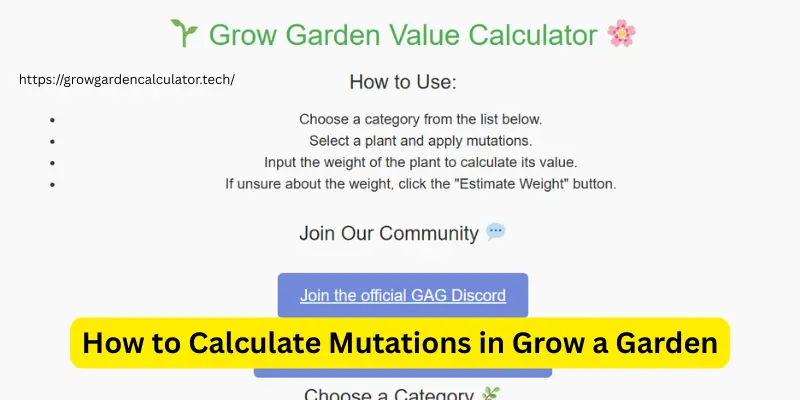
- Online tools such as a mutation calculator for plants or your grow garden calculator help measure mutation frequency.
- Formula often used:
- Mutation Frequency (%) = (Number of Mutated Plants ÷ Total Plants Studied) × 100
- Step 5 – Estimate Mutation Rate
- Use the results to estimate how often mutations occur in your garden. This helps you decide whether changes are rare, common, beneficial, or harmful.
- 👉 Tip: Record your results in a notebook or spreadsheet to track changes over time.
🔧 Tools for Mutation Calculation in Gardening
Calculating mutations doesn’t require expensive lab gear—you can start with simple tools:
✅ Mutation calculator tool – Provides quick percentage estimates.
✅ Grow garden calculator – Helps track plant variation data.
✅ Manual records – A notebook or spreadsheet works too.
✅ Genetic analysis kits (optional) – Advanced, but not necessary for home gardeners.
🌿 Practical Examples of Garden Mutations
Mutations are more common than you think. Here are a few real-world examples:
🌸 Flowers changing colors: A red flower suddenly produces pink or striped petals.
🥕 Vegetables with odd shapes: Carrots that split, tomatoes that grow in clusters, or cucumbers that curl.
🌱 Growth rate differences: Some seedlings grow much faster or slower than others.
🌼 Leaf pattern variations: Plants may develop spotted, striped, or unusually shaped leaves.
🌍 Benefits of Understanding Plant Mutations
Studying plant mutations isn’t just for scientists. It has several gardening benefits:
✅ Encourages biodiversity in your garden.
✅ Helps develop resilient plants resistant to pests or diseases.
✅ Opens doors for creating new garden varieties.
✅ Makes gardening more fun and experimental.
🚫 Common Misconceptions About Mutations in Gardens
Many gardeners misunderstand mutations. Let’s clear up a few myths:
❌ “All mutations are bad.” → Wrong. Some mutations are beneficial and desirable.
❌ “Mutations only happen in labs.” → False. Natural mutations occur in every garden.
❌ “Mutations are always visible.” → Not true. Some changes happen at the DNA level without showing obvious signs.
📊 FAQs About Calculating Plant Mutations
Q1: Can I track mutations without a calculator?
Yes, you can manually count plants with variations and calculate percentages.
Q2: Do I need lab equipment for mutation tracking?
No. A notebook, your eyes, and simple tools are enough for home gardening.
Q3: How often should I check for mutations?
Every growth cycle or season is ideal.
Q4: Can mutations improve crop yields?
Yes, some mutations lead to stronger, faster-growing, or tastier crops.
Q5: What is the role of DNA mutations in plants?
They provide the raw material for evolution and diversity in your garden.
🎯 Conclusion
Calculating mutations in your garden may sound technical, but with the right approach it’s simple and rewarding. By using a mutation calculator for plants or even your own grow garden calculator, you can track changes, discover new varieties, and improve your gardening outcomes.